Education: Empowering the Marginalized for Every Child a Brighter Future
Unlocking potential and building futures through quality education for marginalized communities.
Our Vision for Education
Achievements at a Glance
- • 100 Model Villages successfully created in our project operational area.
- • 40 Years of committed service to marginalized communities.
- • Accredited Member of the Credibility Alliance of NGOs in India.
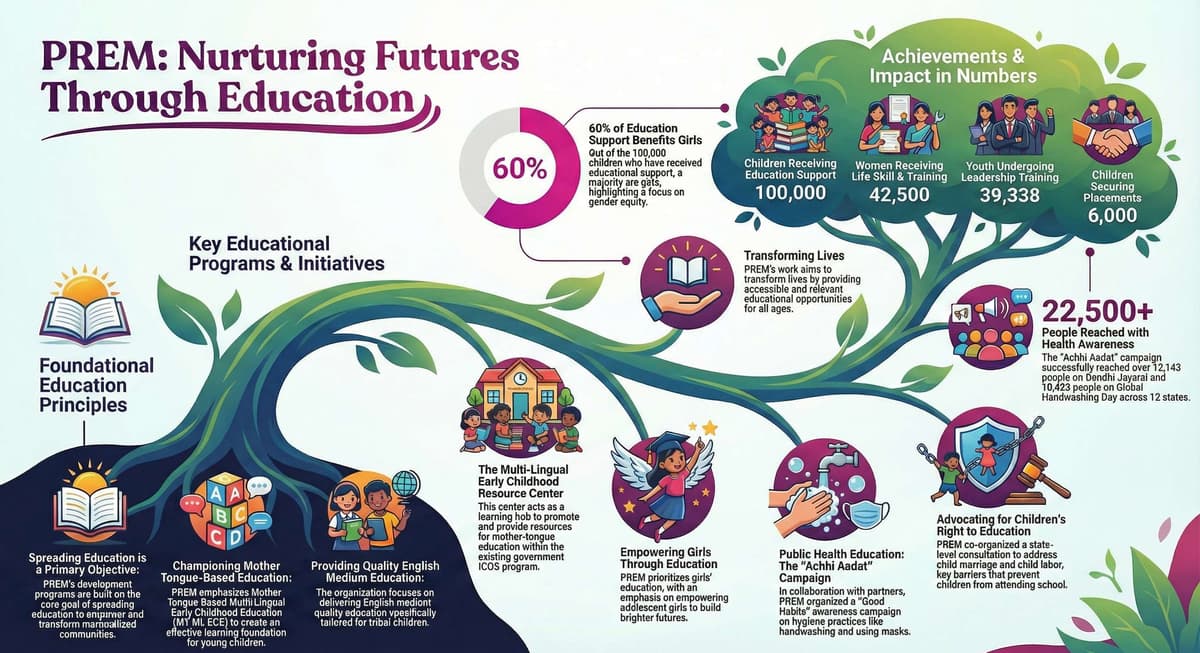
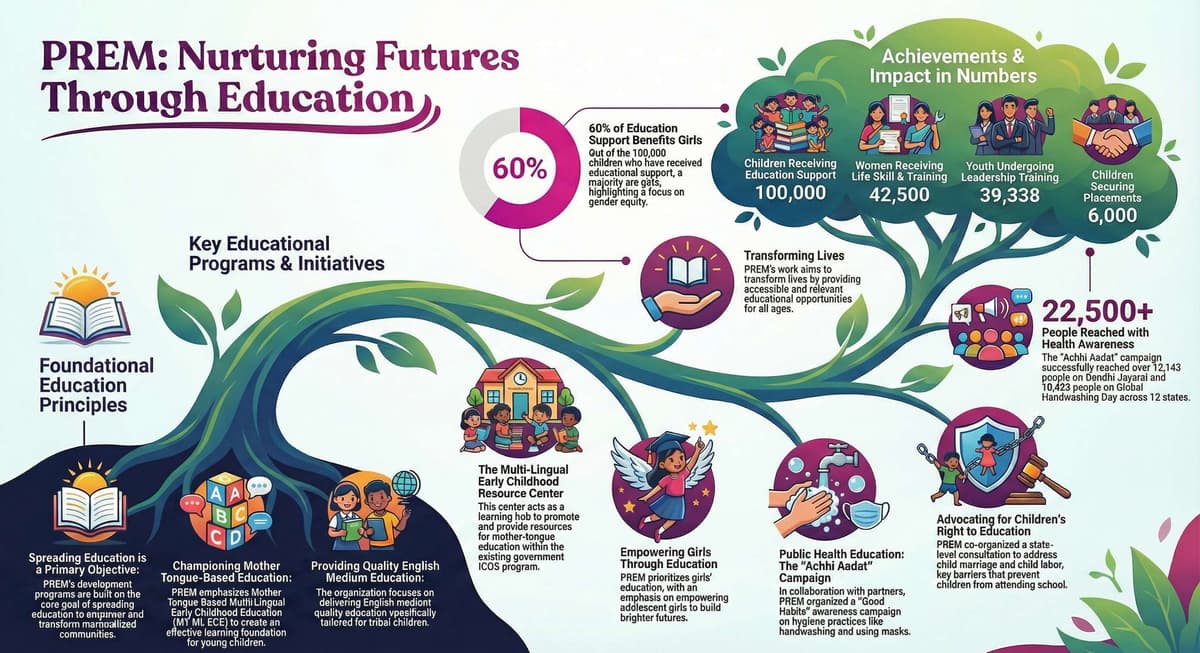
- • 42,500 Women received life skills and Income Generation Program (IGP) training6.
- • 39,338 Youth underwent leadership training.
Our Core Education Initiatives
PREM believes that education is the most powerful tool for empowerment. Our programs are designed to meet the specific cultural and linguistic needs of tribal and marginalized populations.
• Mother Tongue-Based Multi-Lingual Early Childhood Education (MT ML ECE): We operate a specialized Resource Center and Information Hub that provides guidance on integrating native languages into the existing ICDS (Integrated Child Development Services) program. This center develops teaching and learning materials specifically for tribal areas and offers information on government policies and schemes related to Early Childhood Care and Education (ECCE).
• English Medium Quality Education: We provide high-quality English medium education specifically for tribal children to ensure they have the skills necessary to compete in a globalized world.
• Residential and Community Centers: In the Ganjam and Gajapati districts, we run community centers and residential schools to provide a safe and nurturing environment for holistic child development.
• Scholarship and Financial Support: We provide targeted scholarship support to ensure that financial barriers do not prevent marginalized children from accessing formal education.
• Adolescent and Youth Empowerment: Beyond basic schooling, we provide life skills training for adolescent girls and leadership training for youth to prepare them for professional placements and community responsibility
Challenges and Responsive Strategies
Working with marginalized communities involves navigating complex social and environmental challenges. PREM addresses these through strategic collaboration and community-led action.
• Social Barriers: We actively combat systemic issues like child marriage and child labor. In 2021, PREM collaborated with the Odisha State Commission for Protection of Child Rights (OSCPCR) to host state-level consultations involving over 120 experts and activists to drive policy and awareness.
• Sustainable Development: We recognize that creating lasting change is not a "one man or one day job". Our Model Village initiative addresses this by involving various stakeholders and community members over the long term to build self-sustaining "Models in Excellence".
• Crisis Resilience (COVID-19): During the pandemic, we pivoted to protect the lives and livelihoods of vulnerable tribal and migrant families. We sensitized 25,000 families and distributed ration kits, clothing, seeds, and over 7,000 sanitary kits to Particularly Vulnerable Tribal Groups (PVTGs).
• Hygiene and Health: We addressed public health challenges through the "Achhi Aadat" (Good Habits) campaign, reaching 12,143 people in 101 locations across 12 states to promote handwashing, mask-wearing, and social distancing.
Our Impact: Transforming Communities
Through our integrated approach, we have scaled our reach from local villages to a national level, impacting millions of lives across 30 states.
• Educational Outreach: To date, 100,000 children have received education support through our programs, with a significant emphasis on gender equality—60% of these students are girls.
• Youth Success: Over 6,000 children and youth from our programs have successfully secured professional placements.
• Historical Reach: Through our extensive network, we have historically reached 2,000,000 beneficiaries across 30 districts in Odisha and 5,000,000 beneficiaries across all states in India.
• Present Reach: Currently, we are active in 8 districts, 65 blocks, and 1,280 villages, directly supporting 64,000 families and a population of 256,000.
Related Projects

BridgeIT: Digitally Empowering Rural Communities
In recent years, India has witnessed a paradigm shift regarding youth development, specifically focusing on livelihood generation through micro-entrepreneurship. However, a severe lack of job opportunities—especially for rural youth—has forced many to migrate away from their communities in search of employment.

Bal Vikas: Child Focused Community Development
Spreading education, healthcare, livelihoods, and protecting child rights to empower and transform Adivasi, Dalit, and marginalized communities.
Related News
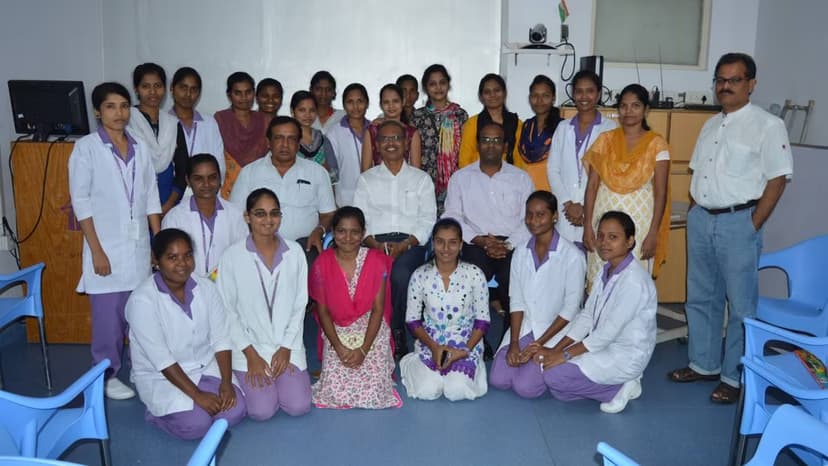
PREM Celebrates International Day of the Girl Child
PREM organized a series of events across Ganjam and Gajapati districts to celebrate the International Day of the Girl Child. The events included rallies, debates, and cultural programs aimed at raising awareness about girls' rights and promoting their empowerment.